Blog
We keep you up to date on the latest tax changes and news in the industry.
Biblical Tax Stewardship
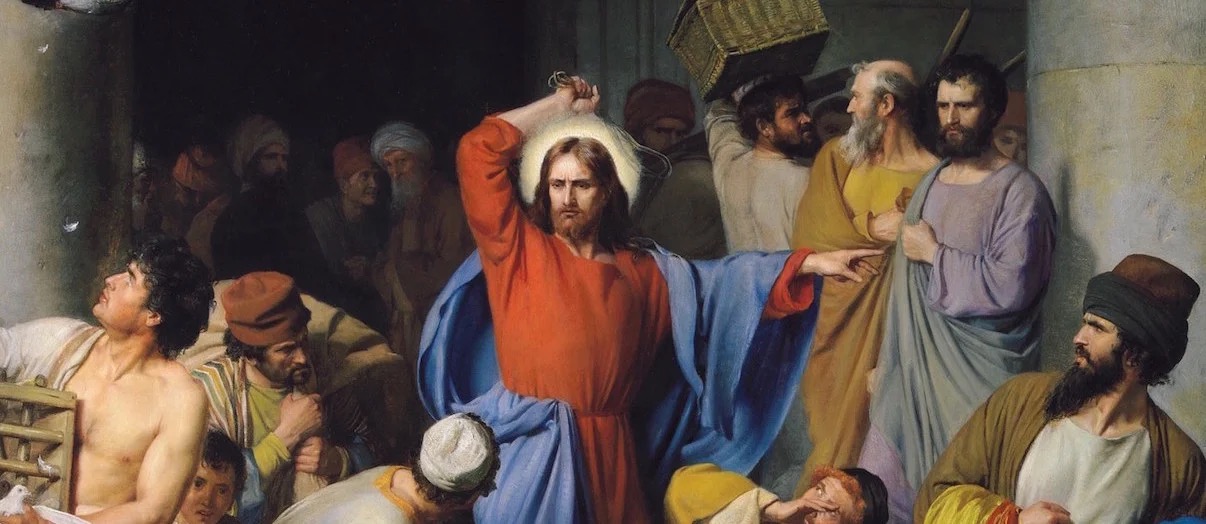
The Biblical Foundation of Tax Stewardship: Honoring God, Respecting Caesar, and Keeping What's Rightfully Yours
By Paul D. Diaz, EA, MBA | THE TAX CUTTERY® | January 1, 2026
As Christians, we're called to be faithful stewards of everything God has entrusted to us—including our finances. And yes, that includes how we approach taxes. The Bible has far more to say about money, government, and stewardship than most people realize.
In fact, Jesus addressed taxes directly, and His answer reveals a profound truth about the balance between our obligations to civil authority and our higher calling as stewards of God's resources.
As a Dave Ramsey Trusted Tax Provider, I've seen firsthand how biblical financial principles transform lives. Dave often says, "Winning at money is 80 percent behavior and 20 percent head knowledge." The same principle applies to tax stewardship: it's not just about knowing the rules—it's about having the right heart and the wisdom to apply God's principles to your financial life.
Render Unto Caesar—But Know What Belongs to Caesar
The Pharisees thought they had Jesus trapped. "Is it lawful to pay taxes to Caesar, or not?" they asked, expecting Him to either alienate the people or commit treason against Rome. His answer was brilliant:
Render therefore unto Caesar the things which are Caesar's; and unto God the things that are God's.
— Matthew 22:21 (KJV)
Notice what Jesus didn't say. He didn't say render unto Caesar everything. He said render what belongs to Caesar. There's a profound distinction here.
We have a legitimate obligation to pay lawful taxes—but we also have a stewardship responsibility to retain what rightfully belongs to our families, our churches, and our futures.
Dave Ramsey puts it this way: "No one got rich on a government program. Do not choose to be a common man. You can be uncommon." Being uncommon means understanding that overpaying taxes through ignorance or negligence isn't noble—it's poor stewardship.
The Parable of the Talents: Maximizing What God Entrusted to You
In Matthew 25, Jesus tells the story of a master who entrusted his servants with different amounts of money—talents—before leaving on a journey. Two servants invested wisely and doubled their master's money. One buried his in the ground, afraid of risk.
His lord answered and said unto him, Thou wicked and slothful servant... thou oughtest therefore to have put my money to the exchangers, and then at my coming I should have received mine own with usury.
— Matthew 25:26-27 (KJV)
The master didn't commend caution—he condemned passivity. Biblical stewardship requires us to maximize what God has given us, not surrender it through inaction.
This applies directly to tax planning. Every dollar you unnecessarily send to Washington is a dollar you can't invest in your family, your business, your church, or your community.
As Dave Ramsey teaches, "A budget is telling your money where to go instead of wondering where it went." Tax planning is the same principle—you're telling your money where it should go rather than letting government inefficiency decide for you.
The Shrewd Manager: Wisdom Is Praiseworthy
One of Jesus's most misunderstood parables is the Parable of the Shrewd Manager in Luke 16. A manager facing termination strategically reduced the debts owed to his master to secure his future. Rather than condemning him, Jesus used him as an example:
The master commended the dishonest manager because he had acted shrewdly. For the people of this world are more shrewd in dealing with their own generation than are the people of the light.
— Luke 16:8 (NIV)
Jesus is making a point about wisdom and foresight—not endorsing dishonesty. Christians should be at least as shrewd about financial matters as worldly people. Being naive about tax law when legal strategies exist to minimize your burden isn't spiritual—it's negligent.
Dave echoes this principle: "You must walk to the beat of a different drummer. The same beat that the wealthy hear. If the beat sounds normal, evacuate the dance floor immediately!" Financial wisdom often means doing what the crowd doesn't understand.
Joseph's Tax Rate: A Biblical Benchmark
Here's something fascinating: when Joseph governed Egypt during the seven years of plenty and the seven years of famine, he instituted a tax policy. The rate? Twenty percent.
And it shall come to pass in the increase, that ye shall give the fifth part unto Pharaoh, and four parts shall be your own.
— Genesis 47:24 (KJV)
This was considered wise, sustainable governance—20% to the government, 80% retained by the people. Compare that with modern combined tax burdens that often exceed 40-50% when you add federal income tax, state-related taxes, payroll taxes, property taxes, sales taxes, and countless hidden fees.
From a principled perspective—and a biblical one—there's every reason to use every legal strategy available to keep your burden closer to what Joseph knew worked.
The Government Debt Crisis: A Failure of Stewardship
Dave Ramsey has addressed our nation's debt crisis with characteristic bluntness. Using a widely circulated illustration, he's made the scale comprehensible: "If the US Government was a family—they would be making $58,000 a year, spending $75,000 a year, and are $327,000 in credit card debt."
The Bible speaks clearly about debt:
The rich ruleth over the poor, and the borrower is servant to the lender.
— Proverbs 22:7 (KJV)
Our government has made us all servants—not to wise creditors, but to future generations who will inherit our debts and foreign nations who hold our bonds. When our government fails at basic stewardship, we have every biblical and moral justification to practice excellent personal stewardship, including minimizing our contribution to that broken system while remaining fully legal.
The Proverbs on Planning and Diligence
The book of Proverbs is essentially a manual on wise living—and much of it addresses financial matters directly:
The plans of the diligent lead surely to abundance, but everyone who is hasty comes only to poverty.
— Proverbs 21:5 (ESV)
Know well the condition of your flocks, and give attention to your herds, for riches do not last forever.
— Proverbs 27:23-24 (ESV)
These verses support proactive planning rather than reactive panic every April. As Dave says, "You've got to tell your money what to do, or it will leave." Tax planning is telling your money what to do before the government tells you what you owe.
Generosity Flows from Stewardship, Not Statism
Some might argue that paying more in taxes is somehow "generous" or reflects Christian charity. Let's be clear: coerced redistribution is not generosity. Biblical giving is voluntary, cheerful, and directed by God's leading—not by bureaucratic formulas.
Each one must give as he has decided in his heart, not reluctantly or under compulsion, for God loves a cheerful giver.
— 2 Corinthians 9:7 (ESV)
Dave Ramsey emphasizes: "Giving is the antidote for selfishness. It's the hallmark character quality of those who win with money." But he also says, "If you live like no one else, later you can live—and give—like no one else."
The logic is clear: the more you keep through wise stewardship and legal tax planning, the more you have available to give to your church, to missions, to the poor, to causes that align with your values rather than Washington's priorities.
Practical Application: What Would Jesus's Tax Advisor Say?
Based on biblical principles, here's what faithful tax stewardship looks like:
Pay What You Owe—Not What You Could Owe
Render unto Caesar what is Caesar's—but don't render more than legally required. Ignorance of deductions, credits, and strategies is not a virtue.
Plan Ahead
The diligent plan leads to abundance. Year-end tax planning, retirement contribution strategies, and entity structuring decisions should be made proactively, not reactively.
Maximize Legitimate Deductions
Business expenses, charitable contributions, retirement savings, health savings accounts—these exist in the tax code for a reason. Using them is wise stewardship, not tax evasion.
Give Generously—On Your Terms
Every dollar saved on taxes is a dollar you can direct according to your values—to your church, to ministries, to helping neighbors in need. That's generosity. Writing a bigger check to the IRS is just compliance.
Build Wealth to Bless Others
The Parable of the Talents teaches multiplication. Building wealth isn't greed when the purpose is to bless your family, fund Kingdom work, and create generational impact.
New Tax Law Blessing: The OBBBA and Power Planning for Tithers
Here's where biblical stewardship meets practical tax strategy. The One Big Beautiful Bill Act (OBBBA), signed into law on July 4, 2025, includes provisions that can help faithful tithers pay less in taxes while giving more to their church. That's not a contradiction—that's wise stewardship in action.
The New Above-the-Line Charitable Deduction
Starting in 2026, the OBBBA makes permanent an above-the-line deduction for charitable contributions—$1,000 for single filers and $2,000 for married couples filing jointly. This means even if you take the standard deduction, you can still deduct your tithe.
For the roughly 90% of taxpayers who don't itemize, this is significant. Your faithful giving to your local church now reduces your taxable income directly—not through complicated itemization, but right off the top.
Important note: This deduction applies to cash gifts directly to qualifying charities (like your church), not to donor-advised funds. Your Sunday tithe check qualifies.
Power Planning: QCDs for Those Taking RMDs
Here's where strategic planning gets exciting for retirees. If you're age 70½ or older—and especially if you're already subject to Required Minimum Distributions—Qualified Charitable Distributions (QCDs) are one of the most powerful and underutilized tax strategies available.
A QCD allows you to transfer up to $108,000 (2025 limit, increasing to $111,000 in 2026) directly from your IRA to your church or other qualified charity. The distribution satisfies your RMD requirement, is excluded from your taxable income entirely, doesn't appear on your tax return as income, and can reduce your Adjusted Gross Income—potentially lowering Medicare IRMAA surcharges and the taxation of Social Security benefits.
The Math That Glorifies God
Let's say you're a married couple with a $50,000 RMD and you tithe $12,000 annually to your church. Without planning, you take the $50,000 distribution (fully taxable), write a check to your church for $12,000, and hope to itemize enough to deduct it.
With a QCD strategy: You direct $12,000 of your RMD straight to your church. That $12,000 never hits your tax return as income. You only have $38,000 of taxable IRA income instead of $50,000. Your tithe still reaches your church, but you've reduced your taxable income by $12,000—potentially saving you $2,640 or more in federal taxes alone (at the 22% bracket).
Now imagine taking those tax savings and adding them to your giving. You've just blessed your church even more—using money that would have gone to Washington.
Honor the LORD with your wealth and with the firstfruits of all your produce; then your barns will be filled with plenty, and your vats will be bursting with wine.
— Proverbs 3:9-10 (ESV)
Important Planning Note for 2025
The OBBBA also introduced some changes that make 2025 a critical year for charitable planning. Starting in 2026, itemizers face a new 0.5% AGI floor on charitable deductions, and high-income donors see reduced marginal benefit. If you're considering a large gift—perhaps to a building fund, a mission, or a donor-advised fund for future giving—2025 may be the optimal year to act.
Stewardship Is Spiritual
Tax planning isn't a worldly distraction from spiritual life—it's an expression of biblical stewardship. Jesus didn't condemn paying taxes, but He also made clear that not everything belongs to the government. The Parable of the Talents condemns passivity. Proverbs demands planning and diligence. Joseph's example gives us a benchmark for reasonable taxation.
And now, with tools like QCDs and the new above-the-line charitable deduction, faithful Christians have more ways than ever to minimize their tax burden while maximizing their kingdom impact.
As Dave Ramsey concludes, "There's not a party, a congressman, a senator, etc., elected that will fix your life. YOU have to fix YOUR life."
Take ownership of your tax stewardship. Plan wisely. Keep what's yours. Give generously. And render unto Caesar only what truly belongs to Caesar.
Ready to Practice Biblical Tax Stewardship?
As a Dave Ramsey Trusted Tax Provider and IRS Enrolled Agent, I help families and business owners across the country minimize their tax burden through legitimate, strategic planning—so you can keep more for your family, your church, and your future.
Whether you need help implementing QCD strategies, maximizing your charitable deductions under the new OBBBA rules, navigating an IRS matter, or developing a comprehensive tax plan aligned with your values, I'd welcome the opportunity to discuss how we might work together.
I serve clients nationwide from my headquarters in Longwood, Florida. The families I work with aren't looking for the closest tax preparer—they're looking for the right one.
Click the "Book Appointment" button on our website's menu bar to schedule your tax stewardship consultation.
Paul D. Diaz, EA, MBA, is an IRS Enrolled Agent, Registered Investment Advisor, and IRS Certifying Acceptance Agent serving taxpayers nationwide through THE TAX CUTTERY®, headquartered in Longwood, Florida. As a Dave Ramsey Trusted Tax Provider, he is committed to helping families achieve financial peace through biblical stewardship principles.
Sign up for our newsletter.
Each month, we will send you a roundup of our latest blog content covering the tax and accounting tips & insights you need to know.
We care about the protection of your data.
Copyright © 2025 THE TAX CUTTERY® - "THE TAX CUTTERY®" IS A REGISTERED TRADEMARK - All Rights Reserved.
Securities offered through PFS Investments Inc., member FINRA & SIPC. Investment advisory services may be offered through PFS Investments Inc. or, where applicable, through a separately registered investment adviser. Paul D. Diaz is an IRS Enrolled Agent & IRS Certifying Acceptance Agent and provides ITIN/W-7, tax preparation, tax resolution, and tax advisory services through THE TAX CUTTERY®, an independent firm. Tax services are not offered through PFS Investments Inc. or its affiliates and are solely the responsibility of THE TAX CUTTERY®. This message is not intended as an offer or solicitation in any jurisdiction where such offer or solicitation would be unauthorized. All investments involve risk, including the potential loss of principal. Past performance is not indicative of future results.
Paul D. Diaz, EA, MBA, has unlimited representation rights before the Internal Revenue Service.